Thirty-eight white keys, one for each instrument.
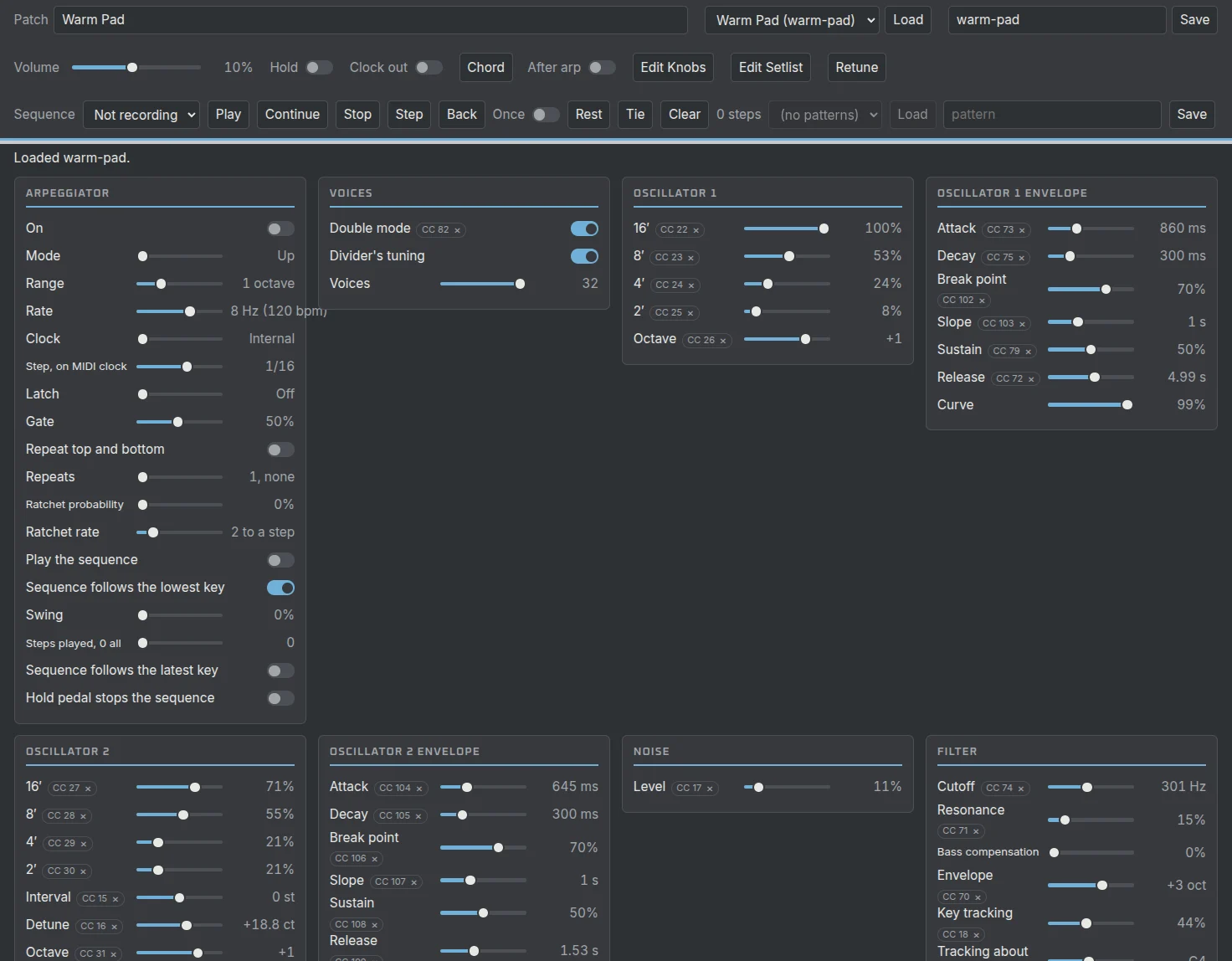
Shape sounds from a browser
Each instrument has a web page with all of its controls. Open it on a computer or tablet on your network, adjust a sound, and save it as a patch.
You can also control it from a terminal over SSH, or leave it running without a screen.
The collection covers analog polysynths and monosynths, patchable semi-modulars, string ensembles, a vocoder, a phase-distortion digital synth, a tonewheel organ and classic electric keyboards.
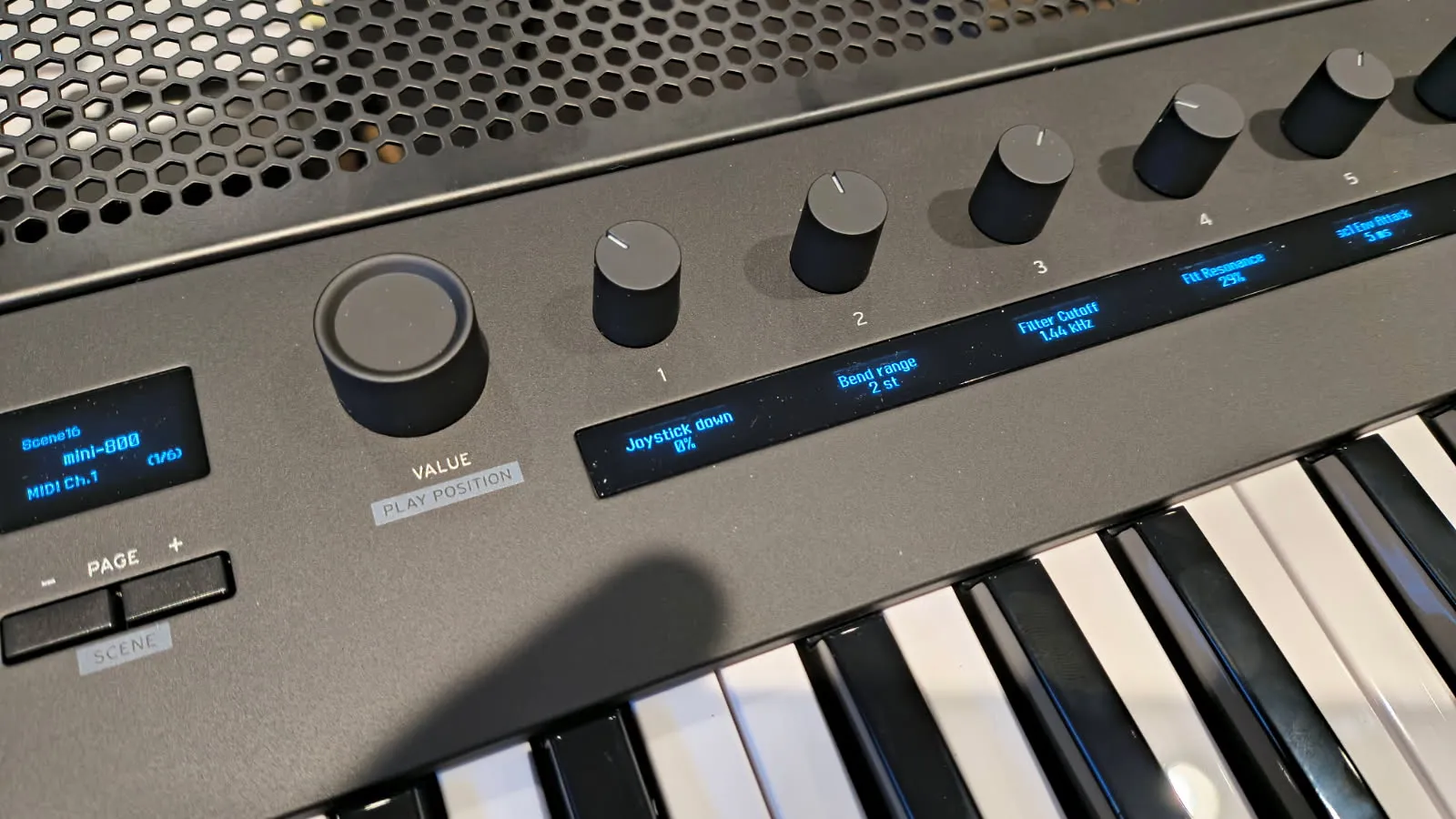
Play it with real keys and knobs
Connect a USB audio interface and a USB MIDI controller, and play. Knobs can be assigned to any parameter, and one supported controller also shows each knob’s name and value on its own screen.
Where it runs
Raspberry Pi 3B
All thirty-eight live in one program, one playing at a time. It can start at boot, ready to play. It needs a 64-bit operating system.
Linux and Mac
The same programs build for Linux, and for Mac computers with Apple silicon.
Your music software
Each instrument is also a plugin: CLAP and VST3, plus Audio Unit on a Mac.
Get mini-800
Download a release for Linux or an Apple silicon Mac, or build it from source. The code, instructions and issue tracker are on Forgejo.
Download a release View the project on Forgejo